
Decks Designed to Function Outdoors Without Constant Repair
Decking services in Eastsound for custom deck builds, structural repairs, refinishing, and surface protection
The outdoor living spaces on Orcas Island properties range from simple ground-level platforms attached to mid-century homes to elevated multi-level structures on properties with significant grade change, and the structural and material requirements differ substantially between them. Salinas Roofing & Construction provides decking services in Eastsound that cover new custom builds, repairs to existing structures, and surface refinishing for decks that have lost their protective coating or developed board-level deterioration. Every project begins with a structural evaluation so that the work addresses what the deck actually needs rather than what's visible on the surface.
New deck construction involves decisions at the framing stage that determine how the structure performs over its service life. Beam sizing, joist spacing, and connection hardware are selected based on the deck's load requirements and the attachment method to the house—ledger-attached decks require flashing details that prevent water from entering the rim joist, which is the failure point most commonly responsible for structural rot in older attached decks on island properties. Decking board selection also affects longevity: pressure-treated lumber, tropical hardwoods, and composite materials each have different maintenance profiles, and Salinas Roofing & Construction explains those trade-offs so property owners choose based on actual use patterns.
Request a custom quote based on your specific site conditions, deck footprint, and intended use so scope and materials can be confirmed before any work begins.
The Difference Between a Repaired Deck and a Rebuilt One
Deck repair decisions hinge on where the deterioration is located and how far it extends. Surface board replacement addresses boards that have cracked, cupped, or lost enough surface fiber to hold splinters but leaves the framing intact if it tests sound under a screwdriver probe. When rot has entered the ledger, posts, or beam-to-post connections, surface-only work doesn't resolve the structural problem—those framing members carry the load, and replacing them requires temporary shoring, connection hardware reinstallation, and in some cases new footing work if the existing concrete pad has settled or cracked under the post base. Salinas Roofing & Construction identifies which category the repair falls into before any scope is agreed on.
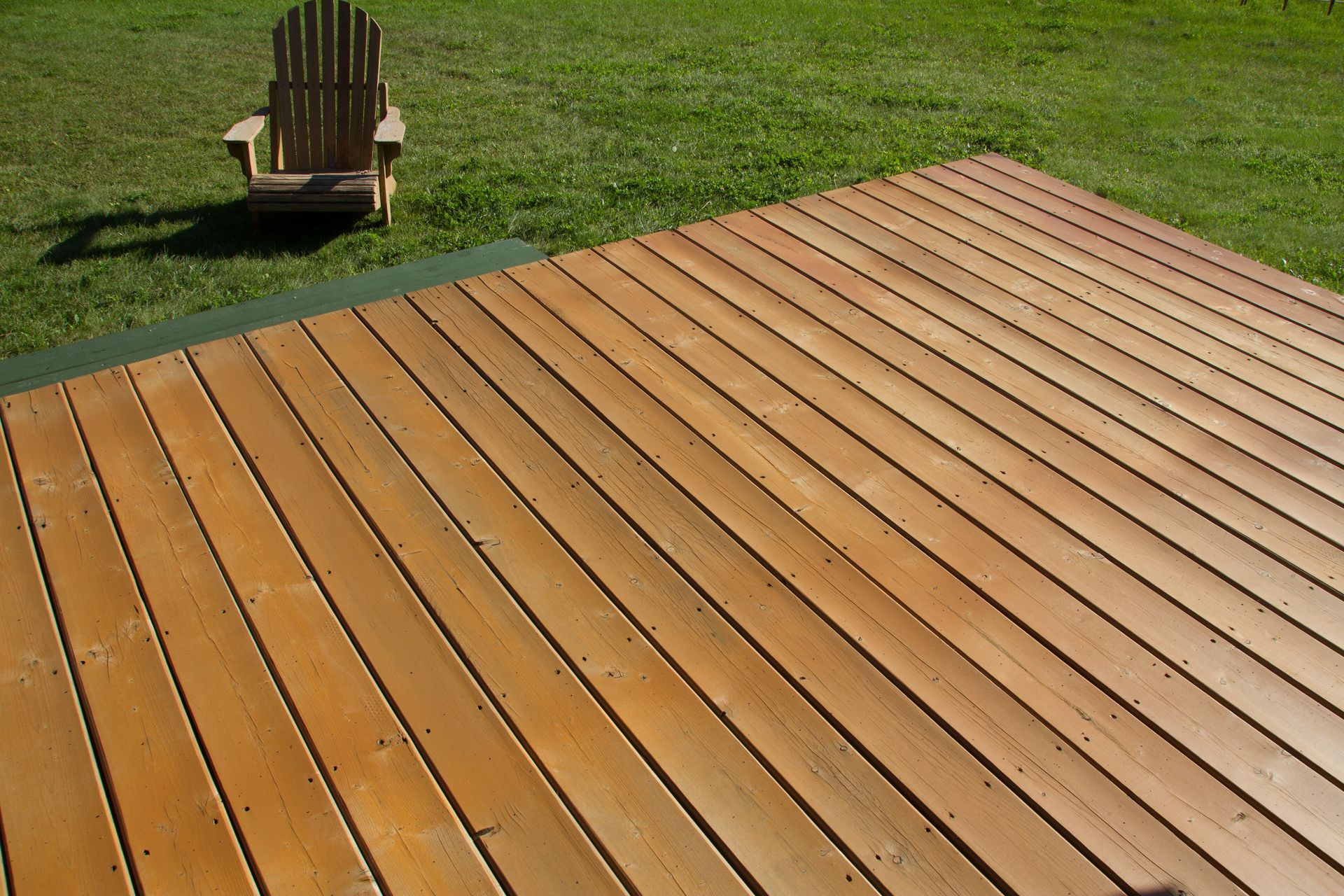
After a deck refinishing or new build is completed, the surface boards lie flat without cupping or visible gaps that catch debris, fasteners sit flush or are countersunk without raised heads that catch foot traffic, and the finish coat—whether a penetrating stain, semi-transparent sealer, or solid color—repels standing water visibly by beading on the surface rather than absorbing. On refinished decks, the previous coating is fully removed by sanding or chemical stripping before new material is applied, because layering a new stain over a failing old one produces the same adhesion failure within a single season.
Decks built on Orcas Island properties that exceed a certain height or square footage threshold typically require a San Juan County building permit and inspection, and Salinas Roofing & Construction manages that process as part of the project. Elevated decks also require guardrail systems built to current code height and baluster spacing requirements, which differ from older decks that were built before those standards were adopted.
Questions Before Starting Your Deck Project
The questions below come from Eastsound property owners evaluating deck construction or repair work, particularly those dealing with older structures where the extent of hidden framing deterioration isn't visible until the surface boards are removed.
How do you determine whether deck framing needs to be replaced or can be repaired in place?
A screwdriver probe test on joists, beams, and the ledger board identifies soft or punky wood that has lost structural integrity. Sound framing resists the probe with consistent firmness, while deteriorated wood compresses or crumbles under moderate pressure. Any member that fails this test in a load-bearing location is replaced rather than reinforced with sistered material, since rot continues to spread from the affected section.
What is the correct way to attach a deck ledger to a house to prevent water intrusion?
The ledger is bolted through the house sheathing to the rim joist using structural lag screws or through-bolts at code-specified spacing, and flashing is installed at the top and sides of the ledger to direct water away from the wall assembly rather than trapping it against the rim joist. On older Eastsound homes where the original ledger was nailed rather than bolted, this attachment point is typically the first location where structural rot appears.
Why do composite deck boards sometimes develop mold or surface staining even though they don't rot?
Most composite decking is not fully impervious to organic growth—its textured surface retains pollen, tannins, and debris that feed surface mold if the deck isn't cleaned regularly. Manufacturers typically specify annual cleaning with an approved deck cleaner and a stiff brush, and decks in shaded areas where the surface stays damp longer require more frequent attention than open, sun-exposed decks.
What should be done to an existing deck surface before applying a new stain or sealer?
The existing finish must be tested for adhesion—new stain applied over a failing old coat won't bond and will peel within one season. If the old finish has lost adhesion, it's removed by sanding or a chemical stripper, the bare wood is cleaned and allowed to dry fully, and the new product is applied in thin, even coats working with the grain of the boards.
How does post footing depth affect the long-term stability of a deck structure?
Footings poured at insufficient depth shift when the bearing soil settles or when the post base connection isn't secured to resist lateral movement. In Eastsound properties on sites with variable fill or grade change, footing depth is confirmed against the local frost depth requirement and the bearing capacity of the existing soil before concrete is poured, since a footing that moves carries the entire deck frame with it.
Salinas Roofing & Construction handles custom deck builds, structural repairs, and surface refinishing for property owners throughout Eastsound who need an honest assessment of what their outdoor structure requires. Submit a project inquiry with your site details to start the planning process.